Key Takeaway: Shrink wrap does not mean factory sealed. Look for Y-folds at all four corners on disc games and an H-seam across the back of Nintendo cartridge boxes. If those aren't there, the game was re-wrapped after opening, not factory sealed.
One of the most common mistakes collectors make is assuming that shrink wrap means “brand new.” Many retro game stores re-wrap opened games before placing them on display. That plastic may look convincing, but it is not the same as a factory seal.
When we buy large collections at The Old School Game Vault, we often see shrink-wrapped games mixed in. Some are legitimately sealed. Others have been re-shrunk. Here is exactly how to tell the difference.
Understanding Y-Folds
Disc games from major companies like Sony, Microsoft, and Nintendo feature a distinctive Y-Fold at all four corners if they are factory sealed. This folding pattern, cannot be mimicked by standard shrink-wrap machines.
Below is an example of a Brand New PS1 game, Tomba 2, compared to a PS1 Game that was re-shrunk, Intelligent Qube.
What we are looking at here are the corners I have circled – in the Tomba game, you see what I mean by the Y-Folds, and the Intelligent Qube game doesn’t have them. 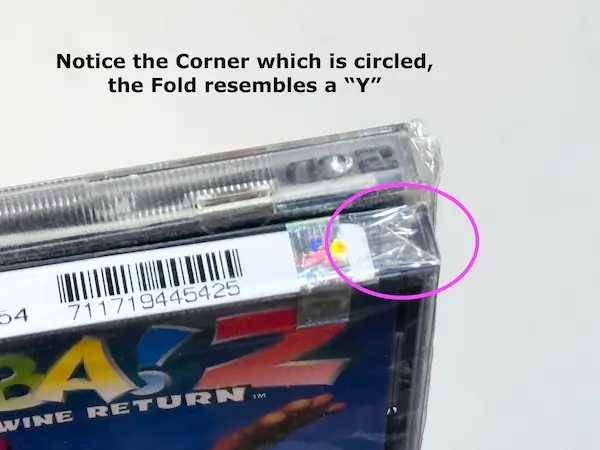
The Tomba game has a hole punched through the side of the game, I get games with a hole like this or a hole punch in the UPC code.. My understanding is that this was done to prevent returns, meaning that if an employee of Sony got this game brand new, they couldn’t take it to Best Buy to try to return it.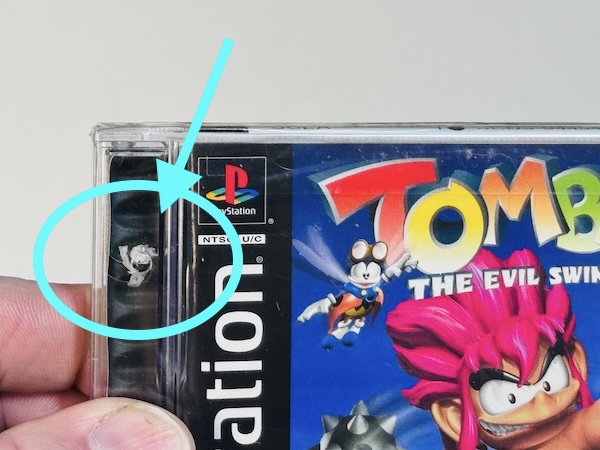
Understanding H-Seams
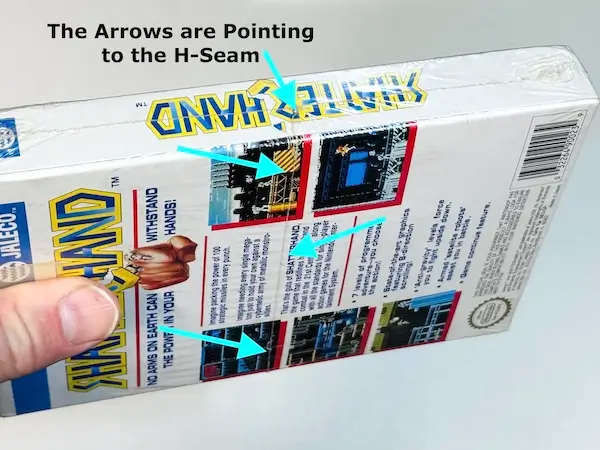
This is another shrink-wrap folding pattern used by Nintendo for their cartridge games over the years. An H-Seam is exactly what the name suggests: a seam running across the back center of the cartridge box, connecting to seams on the sides. When you look at the back of the box, the wrap forms an ‘H’—two lines on the sides and one seam down the middle.
In another example shown in the video below. I have a brand-new H-Seam Sealed copy of Shatterhand for the Nintendo NES. Then the comparison game is a Tang Tang, a Re-shrunk game from the Game Boy Advance library. The games are from different libraries, but Nintendo was consistent at folding their cartridge games with an H-Fold.
Final Thoughts:
When it comes to sealed games, the details matter. A true factory seal is not random plastic. Disc-based games from companies like Sony and Microsoft should show proper Y-folds at the corners. Nintendo’s cartridge-era titles should display a clean H-seam across the back of the box.
Once you understand Y-folds and H-seams, you can quickly evaluate listings, photos, and in-person copies without guessing. These small manufacturing details separate genuine factory-sealed games from re-shrink-wrapped copies.
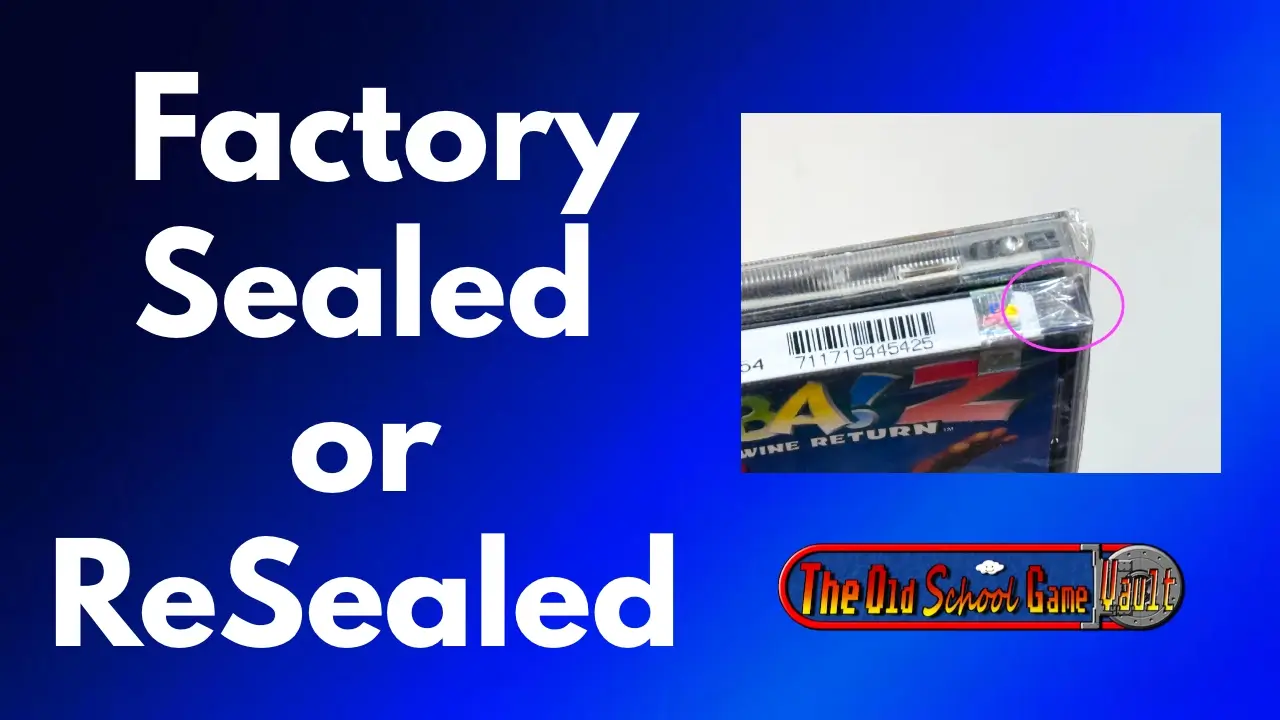
Factory Sealed vs Re-Shrink Wrapped Example.
Frequently Asked Questions
What is a Y-fold on a factory sealed game?
A Y-fold is a distinctive corner fold pattern found on factory sealed disc games from Sony, Microsoft, and Nintendo. At each of the four corners, the shrink wrap folds into a Y shape that standard re-shrink wrap machines cannot replicate. If the corners look flat or irregular, the game was re-wrapped after opening.
What is an H-seam on a factory sealed game?
An H-seam is the folding pattern Nintendo used on factory sealed cartridge games. When you look at the back of the box, the shrink wrap forms an H shape — two vertical seams on the sides and one horizontal seam running across the center. Nintendo used this pattern consistently across NES, SNES, N64, and Game Boy titles.
Can you tell if a game is factory sealed just by looking at the shrink wrap?
Not from a distance. The plastic can look identical at first glance. You need to inspect the corners for Y-folds on disc games and the back of the box for an H-seam on cartridge games. Many re-shrink wrapped games look convincing enough to fool buyers who don't know what to look for, which is why these specific fold patterns matter.
Does a hole punch through a game mean it is not factory sealed?
No. Some factory sealed games were hole punched intentionally — typically through the side of the case or through the UPC code — to prevent returns at retail. This was common practice for employee copies and certain promotional units. A hole punch alone does not disqualify a game from being factory sealed.
Are re-shrink wrapped games worth less than factory sealed?
Significantly less. A legitimate factory sealed game with proper Y-folds or H-seams commands a major premium with collectors and grading services like WATA. A re-shrink wrapped game is essentially an opened game in used condition regardless of how it looks. Misrepresenting a re-wrapped game as factory sealed is considered fraud in the collector market.