Key TakeAway: The games that shaped retro gaming nostalgia weren't just fun; they invented entire genres. Super Mario Bros. defined the side-scrolling platformer, Zelda opened up open-world exploration, and Final Fantasy proved console RPGs could be epic.
My first game system was an Atari 2600, and it first sketched out for me what a video game could be: scrolling maps or static, top-or side-view, one- or two-player, tanks or spaceships or cowboys or Pac-Man or table-tennis-like paddles and bouncing balls. Even when, in retrospect, not all of the games were great, they were all exciting because they were, for a player like me, unprecedented.
The Table of Contents
Retro Gaming Nostalgia and the Rise of Game Genres
- Super Mario Bros. (1985) — defined the side-scrolling platformer
- The Legend of Zelda (1987) — introduced open-world exploration on consoles
- Phantasy Star (1988) / Final Fantasy (1990) — established the console RPG
By the time I got an NES in the late 80s, gaming had started to settle into genres, conventions, and best practices – platformers, scrolling shooters, shmups, beat ‘em ups, and fighting games were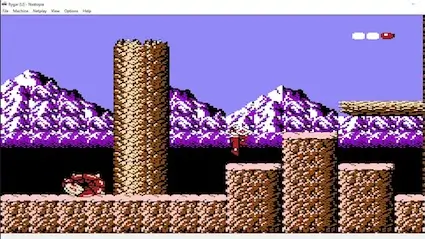 recognizable types even if I didn’t have the genre vocabulary for them.
It’s not a coincidence that this is also when I started to be (slightly) more critical about the games I played: Double Dribble was really good, and Arch Rivals was lame. Galaga and 1942 were good; Tiger-Heli had some interesting features and some weird limitations; and ImageFight was bad. Zelda and Rygar were good, and Willow was bad. (All these are hot takes from 80s playground debates, so your playground may have disagreed with those opinions in retrospect : )
During this 8-bit third generation of video game consoles, I recall having conversations with other young gamers about individual games breaking down the walls of what we’d thought possible and forging new paths.
The gaming landscape had expanded greatly from the Atari to the NES (and Sega Master System) eras, and gamers had a sense of what was possible and access to many really cool games. This was wonderful! On the other hand, it also meant we were harder to wow, because game devs would have to do something we hadn’t seen before. When they did, they might initiate a genre that would then be further developed for decades to come.
Super Mario Bros. and the Side-Scrolling Platformer
Super Mario Bros. plunged off the right edge of TV screens into gamers’ psyches, and hundreds of side-scrolling platformers followed.
This design had been around earlier: earlier touchpoints for me include the 1981 scrolling shooter Defender for the Atari, as well as the 1984 Excitebike and Kung Fu for the NES (and some arcade variants).
But Super Mario Bros. was such a masterclass in design that it was impossible not to feel the potential of the side-scrolling genre in a new way, and its scope felt massive: eight worlds! Four levels each! Overworld, underground, water, sky, dungeons! Mario could be big or small, powered up or not, and you felt his weight, his momentum, his drive to slide ever further to the right in quest of Bowser and Princess Peach.
The Legend of Zelda and Open-World Exploration
The Legend of Zelda (1987 in North America) blew our minds with a top-down open world that let us experience exploration and adventure like never before. The impossibly classy NES game box with its coat of arms and cutout revealing a glimpse of the game within promised something different.
Inside the box was a map of The Overworld that was mind-blowingly large, tantalizingly incomplete, and surrounded by tips, hints, and partial lists of items, enemies, and NPCs. This was an immersive world like nothing we’d seen console games attempt, and guided by Miyamoto’s sure hand, it was once again impeccably executed.
I remember borrowing a friend’s cartridge shortly after the North American release and being allowed, for nearly the very first time, to stay home by myself to play it while my family went out somewhere without me; I got lost in the world for hours and both by the end of that play session and the end of my weekend of borrowing the game, I felt like I had barely scratched its surface. This was a game—and world—that you could quest and explore in.
Phantasy Star, Final Fantasy, and the Console RPG
Phantasy Star (NA: 1988) and Final Fantasy (NA: 1990) expanded on the Zelda model by combining top-down open-world exploration with a separate screen for turn-based battles featuring a somewhat customizable party rather than only one fighter, and a first-person dungeon crawling view in the case of Phantasy Star.
(Honorable mention to Dragon Warrior, the 1989 NA localization of Dragon Quest, which didn’t hit quite as hard as the others but helped bridge the four-year gap between Zelda and Final Fantasy on the NES, not least in having a sweet soundtrack.)
These games expanded the sense of what role-playing could be on consoles – the player could control not just exploration, but party composition and tactics.
These are just a few examples of early console-era genre developments that were central to my personal gaming journey; some of them might overlap with yours, others may not, and there are plenty more examples that I don’t have room for here. Rogue (1980) literally gave its name to the short session live-die-repeat roguelike genre. Pokémon Red, Blue, and Yellow (NA: 1998-99) taught us the joys of encyclopedic bestiaries that combine strategic battle and collecting (and build on the exploration of Zelda and a decade of console RPG descendants).
Video Game Nostalgia and Why Early Games Still Matter
Looking over the examples I’ve reflected on here, what sticks out for me is the sense of wonder and new horizons. Each of these games captured my imagination by promising a wide world of exciting adventure beyond what I’d previously learned to expect. I guess that’s central to what I love about games, and like music from your teens, it's difficult for later experiences to touch the power of the early ones.
What games did this for you? What was it about those games that seized your imagination and made a home there? When you go back and replay them, does that sense of wonder come back for you, as it does for me?