Key Takeaway: Old-school games built character by forcing players to fail repeatedly, problem-solve without help, and push through — skills that modern gaming rarely demands anymore.
Anyone who has played old-school games knows that they are not, by and large, inclined to hold your hand. The difficulty and difficulty curves are punishing, solutions to puzzles are opaque, and the tutorials and hints are…not there.
The Table of Contents
My Introduction to the Brick Wall
When I started playing video games as a kid, I quickly became acquainted with three things:
1) the feeling of hitting a brick wall over and over.
2) the satisfaction of finally breaking through.
3) those little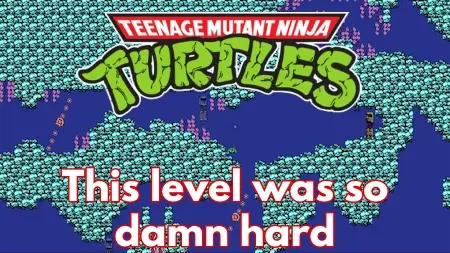 hint books for point-and-click adventures like King’s Quest where you’d use a special highlighter to reveal hints and answers in invisible ink.
I remember stories about the 900-number hint lines, though I never had permission to drop cash on phone calls – about the amazing operators who would help a kid work through a whole labyrinthine level of something, and the clueless ones who had no idea how to solve your problem. My brother, being a decade younger, was of the Brady/Prima Game Guides generation.
But hints, in my experience with pre-internet gaming answers, were the exception. More often, you and your friends would rack your brains to come up with a strategy or solution, work endlessly toward the required flawless execution, or try to brute force the situation.
Sometimes we’d give up! I never saw the end of Teenage Mutant Ninja Turtles (NES) because the underwater level was just too hard. I don’t know anyone who did get to the end. Apparently, if you played the PC version, it was nearly impossible to reach the end. Sorry, computer kids!
Usually, we’d figure something out: on our own, with our couch crews, or through old-school crowdsourcing (or Nintendo Power). I remember the terrible times, rerunning some maddening level or sequence over and over with no sense of progress. But I also vividly remember the great times when you made breakthroughs. Especially if you were the first in your friend group to do so and could then share the news, opening up the rest of the game for everyone. Getting past the challenges of The Legend of Zelda, Contra, Mike Tyson’s Punch-Out, Metroid, or Ninja Gaiden was an accomplishment, even if you were the last one to do it. It was never easy.
Where Did All the Difficulty Go?
The experience of a major, game-halting challenge is rarer in gaming today. Soulslike and rogue-like games keep the tradition of meaningful difficulty alive, as do games with adjustable difficulty settings. Other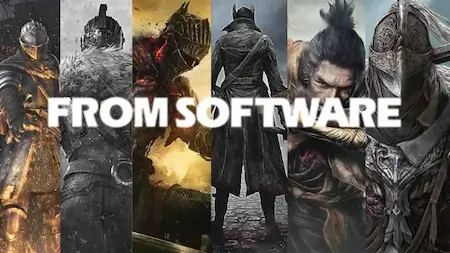 games (from the NES to today) keep their hardest challenges for optional material that players can take or leave, like horde modes in shooters or optional bosses in Souls, Final Fantasy, or God of War games (or Sans in the…darker route of retro classic Undertale).
However, while difficulty is out there for those looking for it, the average gaming experience today is much easier and smoother than in the early days of consoles. Games today almost never bring the main route to an involuntary halt for long without offering a workaround, such as in-game hints, difficulty adjustments, or starting at a checkpoint.
To Be Fair
To some extent, the lowering of difficulty is out of designers’ hands, because the internet gives us narrated video walkthroughs of chokepoints almost immediately, and even for those of us who played the old-school gameswhen they were new-school, it can be hard as a busy adult to justify the time it takes to work through a big gaming challenge without that help. To be fair, not all NES-era games were punishing. Duck Tales had Easy difficulty, Kirby’s Adventure was easygoing by design, and Wizards and Warriors presented challenges but also infinite lives. Even in the old days, there was a difficulty spectrum – it was just notably tipped toward the hard end.
There are good things about today’s easier gaming landscape: some of the difficulty of old-school games is arbitrary, inadvertent, or cruel. And again, since I don’t have the same kind of free time I did as a kid, I appreciate having options other than endless trial and error when I hit a wall in a game.
Something Got Lost Along the Way
But newer gamesand gamers have lost something, too. I watch kids play games and give up or switch to another game as soon as they hit a rough patch. I can’t even blame them: would I have done any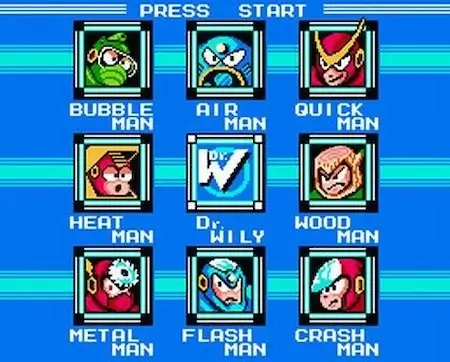 different as a kid if I had the options they do? Still, avoiding challenge isn’t always a good idea. We don’t grow if we don’t try and fail, and learn.
With their Greek-god-like cruel whims and harsher design philosophies, games of the 80’s and 90’s taught us that lesson all the time. I really do think it built character. Decades later, I still remember those lows and the highs that followed. I learned, in my free time, what it felt like to think I couldn’t do something and then learn that I could, with enough hard, smart work. It built confidence and resilience. It also built my social skills, since most of the time, my only outside resources for help were friends and fellow gamers in my neighborhood or at school.
What We Can Take From It
- Spend more time on the hard parts before turning to a walkthrough or lowering the difficulty
- Game together: trade off when frustrated, encourage each other to push through
- Make overcoming a tough challenge the goal, not just making progress
I don’t think we should go back to the ‘it’s only ever hard’ gaming environment of that earlier era. But I do think we can bring the best parts of it to gaming today, both for those of us who lived it the first time and also for younger gamers who didn’t. We can spend a little more time on the hard parts before turning to a video, turning down the difficulty, or turning away altogether.
We can game together, trading off when we get frustrated or encouraging each other to push through. And we can place the thrill of finally overcoming a major challenge more centrally in our gaming goals. I sometimes get caught up on the need to make enough progress when I sit down to play a game, since I don’t have as much time to play as I used to. But remembering those brilliant victories from the days of Mega Man 2 reminds me that there are other meaningful reasons to play besides completion, kinds of gaming that offer accomplishments that can linger positively in your self-image for years.