Key TakeAway: Baldur's Gate 3 is the best RPG ever made at giving players choices that actually matter 100+ hours in, and your decisions still ripple through the world in ways no other dialogue tree game has pulled off before.
I’ve loved diving into the fictional worlds of video games ever since, as a kid, I stumbled across King’s Quest, The Legend of Zelda, Starflight, and Final Fantasy. The world felt so big! You could go all over and find stuff to do! These games pushed the limits of what a story or a game could be.
They introduced me to the biggest storytelling innovation in my lifetime: giving audiences (players) meaningful agency, or control, over what happens in a story. On the game side, they drew me in with combat, exploration, and character advancement and customization, as well as other gameplay mechanics where RPGs, adventures, and action-adventure shade into genres like visual novel adventure (Phoenix Wright: Ace Attorney), walking sim (Gone Home), or puzzle sim (Papers, Please).
The Table of Contents
The combination of a cool world, player agency, fun gameplay loops, and interesting characters and stories really works for me, whatever genre label is used to describe it.
The biggest RPG of our time
RPGs are at the center of this cluster of gaming interests, and the recent flagship of the genre is undoubtedly Baldur’s Gate 3, for good reason. The scope of BG3 is almost beyond belief. The Larian team,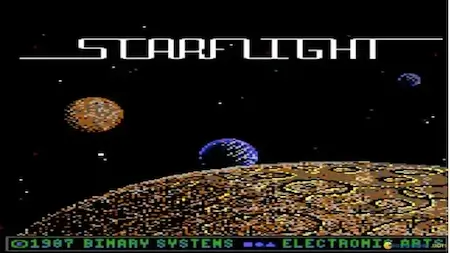 which peaked at around 450, worked closely with the Dungeons & Dragons creative team to deeply detail a fantasy world that already had 45 years of lore in tabletop gaming, dozens of video games, and hundreds of novels to draw on. BG3 includes well over a million lines of dialogue and 140 hours of cutscenes performed by nearly 250 voice actors. That it took six years to make seems surprisingly short, given the intricacy and depth of the final product.
More importantly, Baldur’s Gate 3 is really fun to play. All those numbers in the previous paragraph only matter because they produced a staggering amount of freedom of choice. BG3 is a ‘dialogue tree’ RPG in the vein of BioWare titles like Mass Effect, Dragon Age, Star Wars: Knights of the Old Republic, and of course, the original Baldur’s Gate.
The dialogue tree problem
Dialogue tree games are tricky to scale because your dialogue choices only feel meaningful if they affect the world, but the more such cause-and-effect situations you bring in, the more possible world-state permutations later scenarios ought to include. Telltale Games got around this by telling you ‘Character X will remember that’ when you do something, but not making it quite clear which dialogue/action tree choices have what effects (and which don’t actually have meaningful effects at all).
Mass Effect and other Bioware games got around this by similarly emphasizing certain key consequences and tying most others to an alignment scale (Paragon to Renegade) but not making toooo many other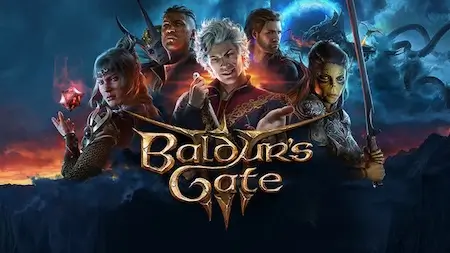 world state changes based on your actions as opposed to your alignment state (and infamously having the finale of the whole trilogy proceed mostly without reference to your three games’ worth of previous choices).
How BG3 actually pulls it off
Baldur’s Gate, more than any other dialogue/action tree game I’ve experienced, manages to scale forking-path dialogue tree consequences without cheating too much.
The game is divided into three acts and features more than a hundred quests, many of which seem to have meaningful effects on the world state. Your interactions with all kinds of groups and individuals ricochet through later encounters in dialogue, quest options, party composition, balance of power, and life-or-death situations.
At times, these choices definitely get bottlenecked into a smaller set of progression paths, but the experience of meaningful choice and consequence was consistent from the start to the finish of my roughly 100+ hour playthrough, including several worthwhile choices in the extended finale sequence (and one that haunts me to this day, Karlach).
It’s easy to throw shade at the dev claim of “17,000 endings” if you want to misinterpret that as different paths rather than different combinations of choice states and epilogue dialogue, but never before have I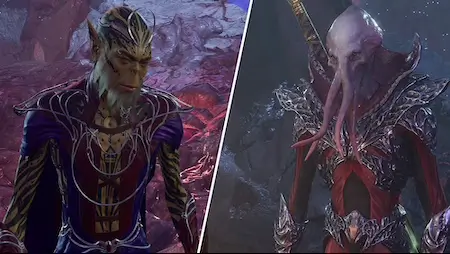 spent a hundred hours with a game and felt like I had truly barely scratched the surface of the available dialogue tree, character origin, and creative action-based choices.
Baldur’s Gate 3 succeeds more than any other game I’ve played at using choice and consequence to enable the intoxicating immersion in a game world that I’ve loved since my first introduction to adventure and RPG games decades ago.
Other recent RPGs like CD Projekt Red’s The Witcher 3 and Cyberpunk 2077 (in its improved later form), ZA/UM’s Disco Elysium, and Larian’s own Divinity: Original Sin II belong in this conversation too, but while each is wide and deep in enjoyable ways and all surpass BG3 in one way or another, BG3 is unmatched at giving depth of texture to the consequences of my words and actions holistically across all phases of the experience, from moment-to-moment encounters to the overall storyline.
Beyond the dialogue tree
A game giving you interesting dialogue tree choices and having your answers matter is hard enough to get right, yet Baldur’s Gate 3 also excels at the pre-Bioware, ‘open world’ style of choice, where the player just does something in open play (without a dialogue tree telling you ‘this is an option’) and the world responds.
There’s nothing quite like the joy of getting a crazy idea, thinking, “I wonder what’ll happen if I do this,” and then finding that the game anticipated your idea and has a rewarding response or consequence ready and waiting for you.
From adopting a cat, dog, or owlbear, getting followed around by headless ghosts, and interfering with fish-people religions to poisoning drinking water, prompting unexpected dialogue by giving companions various inventory items, or making Boo the miniature giant space hamster cry, BG3 rewards doing stuff as much as it rewards selecting options from choice trees.
Why any of this matters
Fantasy games exist to let us players have imaginative experiences that go beyond our regular lives. RPGs explore this idea through accumulating choices that lead the world in one direction rather than another, letting us explore different kinds of actions, personalities, relationships, leadership styles, conflict strategies, and moral universes.
From the ground-breaking early interstellar diplomacy of Starflight forty years ago to the vast landscape of choice in Baldur’s Gate 3 today, video games give us playgrounds to explore what kinds of worlds our actions can shape.