Key Takeaway: In the early 1990s, Raya Systems published a line of SNES health education games for kids with chronic illness. The games were poorly reviewed, but independent research found measurable results, including a 77% reduction in urgent doctor visits among diabetic teens who played Packy & Marlon for three months.
While reading an old gaming thread about obscure NES games, one comment caught my attention: “My friend got this game for having diabetes, which was sorta like an RPG where you had to take care of your main character with diabetes or something. He said it was really shitty and sold it to a mom and pop game store for $100 something last year.”
The Table of Contents
Well. I had to know more.
It turns out that in the first half of the 90s, Raya Systems published not one but two SNES games about diabetes: Captain Novolin, named after the sponsoring insulin brand, and Packy & Marlon.
Primarily educational, they aimed to give kids a fun way to understand, learn to manage, and talk to their friends about their diabetes. Making a fun game about managing a chronic autoimmune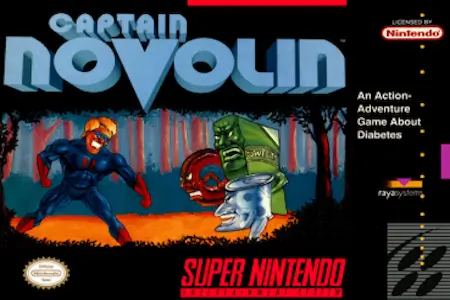 disease presents something of an uphill climb, but the deeper I dug, the wider the mid-90s health education video game subgenre turned out to be – largely, but not entirely, thanks to Raya Systems.
The Game Nobody Asked For
Raya Systems launched their “Health Hero” games line in 1992 with Captain Novolin, whose diabetic superhero fights the alien Blubberman and his junk food henchmen while managing his blood sugar by avoiding unhealthy foods and using his insulin.
The captain spends most of his time hopping over donuts and soft drinks on the street or in speedboats, broken up by occasional insulin administration mini-games and between-level diabetes facts from cartoon doctors.
Raya’s health games were developed by Sculptured Software, the developers of Super Star Wars, Super Empire Strikes Back, and NCAA Basketball. Captain Novolin was released at the 1992 American Diabetes Association meeting and, to a limited extent, given away by hospitals, though you could also buy it at the store like any other SNES game (if your store carried it).
Pretty Crappy, Pretty Good Get
So did a diabetes edutainment game work? It depends on what you’re comparing it to.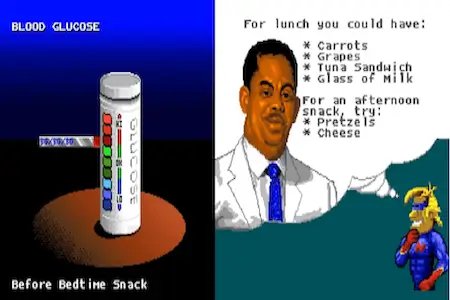
By all reports, Captain Novolin is a pretty crappy game in terms of gameplay, graphics, and sound. Per Matthew Williamson’s retrospective review, Captain Novolin “can only attack when holding down while in mid-air” and has zero superpowers.
In the mid-2000s, Seanbaby ranked it the #4 worst game of all time, better than the Atari E.T. but worse than Superman 64, Total Recall, and Extreme Sports With the Berenstein Bears.
On the other hand, what’s the best thing you ever got for free at the doctor’s office or hospital? A toothbrush? A sticker or sucker? On that list, a bad SNES game made by a decent developer is a pretty good get.
I didn’t have an enormous number of video games in the mid-90s. Even a bad game would probably have gotten multiple hours of playtime from me if it were free.
And if it helped kids learn something about their illness or talk about it to parents or friends, that’s worth something, though game journalist reviews suggest the educational value was limited.
Why It Kept Going
So how did Captain Novolin spawn a whole line of Health Heroes games prominent enough to get featured in Nintendo Power in 1993? My best guess is that parents and doctors will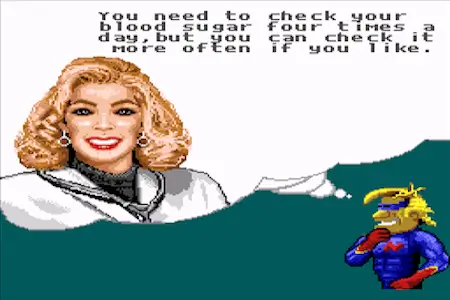 try anything to help kids understand serious health issues, and they didn’t have a great sense of whether or not the games were working.
In 1994, Raya followed up with Rex Ronan: Experimental Surgeon about a doctor who shrinks himself Fantastic Voyage-style to travel through the cancer-afflicted body of a tobacco CEO, showing kids the ways tobacco harms your body, while Rex magically fixes them while fighting off tiny robots sent by the tobacco company to kill the potential whistleblower and his mini doctor. In short: show the dangers of tobacco…while also implying that they can be magically undone?
RR:ES and Captain Novolin were the subject of a 1995 study by Debra A. Lieberman and Stephen J. Brown (researchers who also worked on the games); they had dozens of kids play the Health Hero games and then interviewed them, finding that they enjoyed the games, wanted to keep playing, got the message that smoking is unhealthy, and thought that Captain Novolin would help them explain diabetes to friends.
While no one in gaming was raving over these games, and SNES health education never made it to the mainstream, from a medical education perspective, it seems to have been worth the time and money to try it out.
Raya Systems kept going for a few more years, releasing Bronkie the Bronchiasaurus about asthma in 1995 alongside a second diabetes game. Packy & Marlon follow two elephants trying to retrieve their stolen medical supplies from the villainous Lunch Room Crew (rats and more) at a summer camp while managing their own diabetes.
Like their predecessors, these were not the most fun games on the SNES (though less poorly reviewed than Captain Novolin), but fun enough to possibly be helpful. Lieberman’s research on P&M found that giving the game to teens with diabetes for three months reduced urgent doctor visits by 77% compared to a control group.
After the Health Heroes
Raya Systems went dark (at least as a game producer) after their 1995 double release—I’m guessing because of commercial non-viability and dwindling of healthcare sponsors, though I couldn’t find any reports on their closure.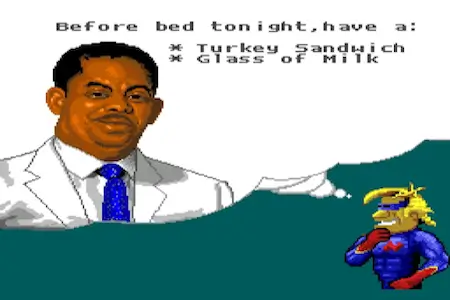
Since then, though, the intersection of health and videogaming has continued to chug along in the background, from PC games like 1995’s Germicide 3D / Health Quest 2 (escaping an amusement park run by germs by defeating them with your germicidal knowledge) to the Wii-era exercise (rather than education) games from Wii Sports and Wii Fit Plus to Switch-era Ring Fit Adventure and Fitness Boxing.
UT Dallas pre-med students test their medical reasoning in a virtual hospital full of fictional patients built within Minecraft, and since 2018, Seattle Children’s Hospital has run a Therapeutic Gaming Program to help patients cope emotionally and socially with hospitalization, and also does some educating, in a type of in-hospital program that is becoming more common around the country.
Not many of us may have bought Captain Novolin at Toys R Us in the early 1990s, but its dream of gaming for juvenile health hung around long enough for hospitals to bring gaming in-house to the patients who can benefit from it most today.