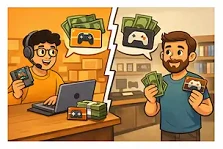
I've had people come in with a box of games they haven't touched in 20 years. They almost always say the same thing: I just want to make sure I'm doing the right thing. That hesitation makes sense. These aren't just games. But at some point, the box in the closet stops being a collection and starts being clutter.
- Not every old game is a goldmine. Common titles have likely peaked and condition fades every year they sit in a box.
- If you haven't touched them in years, selling is almost always the right call.
- Keep the handful that actually mean something. Sell the rest.
- Retail trade-ins pay the least and lock you into store credit. Look for a buyer who pays cash with no strings attached.
- The Old School Game Vault has been buying retro games and systems nationwide since 2008. Get an instant quote with no obligation — the numbers usually make the decision easy.
Should I Sell My Old Video Games?
| Sell If... | Keep If... |
|---|---|
| You haven't touched them in years | You still play them regularly |
| You own common sports or shooter titles | You have Nintendo first-party titles (Mario, Zelda, Pokémon) |
| Condition is slipping — batteries dying, discs scratching | Games are complete in box with original manuals |
| You have original PlayStation or Saturn discs (disc rot risk) | They hold sentimental value you can't replace |
| The box in the closet is clutter, not a collection | You have a complete console setup worth preserving |
The Table of Contents
The Hard Truth About Value
It’s a common myth that every old game is a goldmine. Titles like Super Mario Bros. and The Legend of Zelda are classics, but with over 40 million copies made, they aren't exactly 'rare.' For most common games, prices have likely peaked.
Selling is usually the right choice if:
- The 'Fridge Rule' applies: They have tucked them away for years, only to forget them in a closet or storage unit.
- You're decluttering. Swapping a forgotten box for shelf space (and cash) is often better than holding on to the mess.
- Condition is fading: Batteries die, discs scratch, and labels peel. If you aren't maintaining them, they are losing value every year.
Addressing the Fear of Regret
Most people don’t regret selling for the money; they regret it for the memories. If a game reminds you of childhood or a loved one, keep it. You don’t have to sell everything. We recommend keeping the 'Top 5' that mean the most and turning the rest into real-world cash.
Ask yourself these three questions:
- Will I ever have the opportunity to play this specific game again?
- Do I miss the game, or do I miss the memory of being a kid?
- Would I rather have this box of plastic or the money to pay for a new family experience?
How to Sell Without Getting Ripped Off.
The fear of being 'screwed' is real. To avoid regret, choose a selling option that is:
- Transparent: Shows you prices upfront before you ship.
- Cash-Based: Doesn’t lock you into inflated store credit traps.
- Pressure-Free: Gives you time to think once you have a quote.
Where to Sell Old Video Games
- eBay or Marketplace Apps: Highest potential payout but requires listings, photos, shipping, and your time. Best for one or two high-value titles.
- GameStop or Local Chains: Easiest option but lowest cash return. Store credit offer is always higher than the cash offer.
- Facebook Marketplace or Craigslist: No fees for local pickup but limited buyer pool and constant price negotiation.
- The Old School Game Vault: Mail-in buyback service operating since 2008. Get an instant quote, free prepaid shipping label, and cash within 3-4 business days via PayPal, Zelle, check, or Amazon Gift Card. No listings, no strangers, no store credit.
For a full breakdown of each option, see where to Sell Video Game Systems.
Final Thoughts:
There is no right or wrong answer. Some people keep their games. That is the right call for them. Others sell and feel better the same day. Either way, knowing is better than guessing. If you want to see what your games are worth, search our Live Price Catalog. The numbers usually make the decision easy.
Frequently Asked Questions
Are my old video games worth anything?
It depends on what you have. Common titles like sports games or budget shooters have likely peaked in value. Nintendo first-party titles featuring Mario, Zelda, or Pokémon hold value well. Complete-in-box games with original manuals are worth significantly more than loose cartridges. The fastest way to find out is to search your titles in a live price catalog.
Should I sell my old video games?
If you haven't touched them in years and condition is slipping, probably yes. Keep the handful that actually mean something to you and sell the rest. A forgotten box in the closet isn't a collection — it's clutter that's losing value every year.
Is it profitable to sell retro video games right now?
It depends on what you have. Common titles have likely peaked. If you're waiting for values to climb on standard releases, you're more likely watching condition fade than value rise. Rare titles and complete-in-box games are a different story.
Does GameStop give you cash for old games?
Yes, but the cash offer is always lower than their store credit offer. That gap is intentional — they want you spending inside their ecosystem. If you don't plan to buy more games at GameStop, the store credit has no real value to you.
Is it worth selling old video games online?
For one or two high-value titles, yes. For a full collection, the fees, shipping, listing time, and post office runs eat into what looks like a good return. A $50 eBay sale nets around $20.80 after platform fees, materials, and your time. A mail-in buyback service skips all of that and pays you directly.