The question of physical vs. streaming or downloaded media has taken many twists and turns over the years. Books and music address this issue too, but gaming has its own unique take due to the periodic nature of console releases.
The Table of Contents
In 2013, Microsoft issued an overly complicated explanation of how game sharing and DRM would work with digital games on the soon-to-be-released Xbox One. Fans revolted at the shift from game ownership to revocable game licenses, and amidst the uproar, PlayStation released a contrasting game-sharing plan for the upcoming PS4 in a famous 10-word video.
The Console Wars: Xbox vs. PlayStation
At the time, Microsoft and Sony were coming out of a PS3/Xbox 360/Wii generation in which the Wii dominated casual and family gaming and the PS3 and 360 were relatively evenly matched in their competition for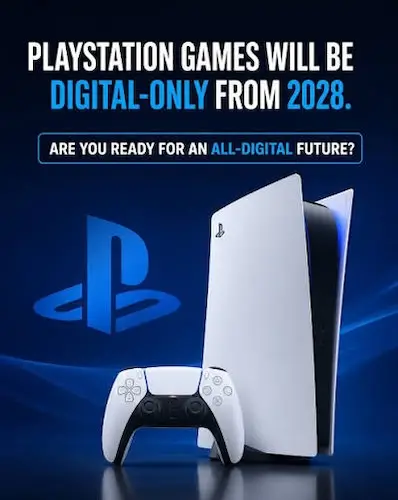 hardcore gamers.
As the PS4-Xbox One approached, Microsoft wanted to grab casual/family market share from Nintendo by pushing the motion-sensing Kinect accessory and games, but it was starting to alienate serious gamers by failing to deliver as much of what they wanted as the 360 era waned. The 2013 DRM-vs-discs public relations disaster helped the PS4 surge ahead among serious gamers, and Xbox never recovered.
PlayStation’s Shift to Digital-Only
Yet 13 years later, PlayStation basically went the Xbox route with its July 2026 announcement that, starting in 2028, new PlayStation games will no longer be produced on game discs for the PS5 (and, presumably, the looming PS6 as well).
While there has been fan backlash, it is considerably more muted than in 2013 because, well, gamers have had 13 additional years to get used to digital gaming, and many, if not most, have.
However, the ownership-vs-revocable-license issue has not progressed meaningfully, so this shift to an all-digital PlayStation experience poses significant risks to consumer protections and the quality of life in gaming.
In that context, it will be interesting to see if the floundering Xbox tries to win back gamers by positioning itself, 2013 PS style, as the home of game discs you can own forever, though current reports suggest that Xbox too is planning for its next-gen console to be digital only.
The Enduring Value of Retro Games
In this environment, retro games on physical discs and cartridges matter more than ever. They come from an era before the licensed obsolescence of purchases, when companies’ and platforms’ fine print reserves them the right to take away your game at some point down the line.
They don’t require updates. Their hardware can’t be bricked by a company withdrawing support for their operating systems and online servers. They are your property, in your home, that you can pop in and play on a moment’s notice just as you always have.
And, as PlayStation reminded us so vividly in 2013, they can be easily shared with a friend.
Physical Collections as Conversation Starters
There’s another aspect of a physical game library that we miss when gaming goes digital: the in-living-room conversation starter.
In the era of physical media, practically the first thing I’d do when going to someone’s home for the first time was browse their media libraries to see what games, books, and music they liked. This was always sure to provide plenty to talk about and help deepen a friendship (well, usually).
When physical media like game discs and cartridges disappear, this can only happen if a console gets turned on and then intentionally browsed, which is far less likely to happen right away unless that was the point of the visit.
What Our Game Collections Say About Us
Our game collections say something about who we are and have been to anyone who visits us. Retro games are particularly good at this because they’re not as default a part of the home furnishings.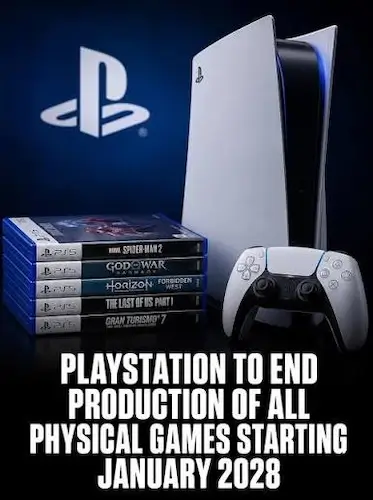
I can’t tell you how many times someone has come over to my house, noticed the N64 under its mass of wired controllers sticking out below the TV, and immediately started browsing through my cartridges to see which have stood the test of time in my library. It’s a point of connection that disappears when housed in the cloud or a console’s internal memory.
The Personal History in Our Collections
Our game collections are also reminders to us. Which games did we eventually sell, which always made the cut, and which did we rebuy and bring back into the fold?
Seeing them as we pass through the room or fire up a console helps us remember the games that have meant the most to us and keeps them in both our playing and our mental rotation.
My Steam backlog, in contrast, has spiraled so far out of control that I no longer find or notice anything in it that I’m not specifically searching for. But the spatial limitations of my living room and TV console ensure this doesn’t happen with my physical library, so my physical game collection keeps me in closer touch with the games that I actually care about.
And in an era when new games are becoming increasingly invisible and tightly controlled by companies and platforms, the old games I’ve long loved matter to me more than ever.