Key Takeaway: The Dreamcast takes the top spot, thanks to its stronger hardware, lasting replay value, and a game library that still feels fresh. The Saturn, though, is a favorite for collectors, RPG lovers, and shmup fans. Some titles, like Panzer Dragoon Saga, can even sell for $1,000 if they’re complete in the box.
The Saturn and Dreamcast were two machines that enjoyed as many similarities as they did stark differences. One system marked the end of the ‘90s gaming era, while the other ushered in the much-heralded 6th generation of consoles that defined the new millennium.
Both were manufactured by Sega and hastened that company’s demise. Despite being regarded as failures at the time, their reputations have only improved in the intervening years.
The Table of Contents
Console Wars - Sega Saturn vs DreamCast
This all begs the question: which is the better machine? Like anything, much of it depends on personal preference. But here’s how the two systems stack up on certain criteria important to gamers, young and old.
The game Libraries
Both consoles score highly among fans when ranked solely by their respective game libraries. Each had its own strengths: the Saturn ported some iconic and fun titles like “Nights into Dreams”, “Dragon Force”, “Clockwork Knight”, and a fantastic fighter in “X-Men Children of the Atom”. Not to mention a solid library of Sonic games like “Sonic R”, “Sonic 3D Blast”, and “Sonic Jam”.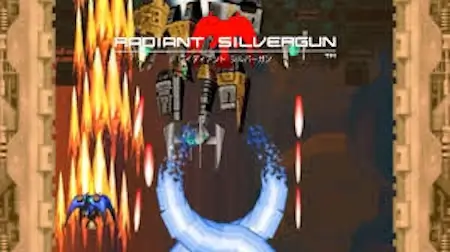
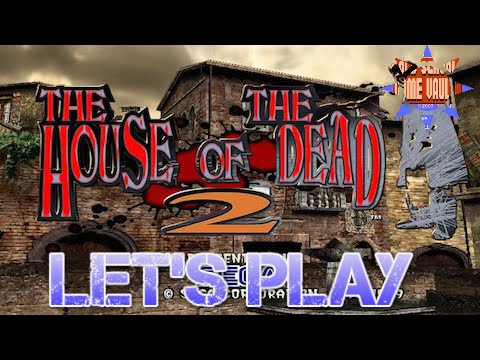
The Dreamcast had hits like “Sonic Adventure” and “Jet Grind Radio,” “Shenmue” as well as wildly popular exclusive titles like “Crazy Taxi.”, and how can you forget the best arcade port of Marvel vs Capcom 2. Neither console was known for light gun games, but both featured the House of the Dead series, and the Saturn had a few more stand-out light gun games.
That said, the Saturn’s library of games has earned an almost mythic status in the retro market due to its abundance of RPGs like “Albert Odyssey,” “Magic Knight Rayearth,” and, of course, “Panzer Dragoon Saga.” So while many Saturn titles have become nostalgic favorites among hardcore gamers, the Dreamcast games continue to offer playable fun to this day. However, the total number of games for the Sega Dreamcast stands at just over 600 compared to over 1,100 for the Saturn. So when taking into account the sheer amount of titles, the Saturn beats the Dreamcast.
From a market perspective, Saturn games command higher prices. Panzer Dragoon Saga sells for around $1,000 complete-in-box, followed by Magic Knight Rayearth at $898 and Burning Rangers at $643. Top Dreamcast titles like Cannon Spike ($307), Illbleed ($296), and Giga Wing 2 ($267) are expensive but nowhere near Saturn RPG prices. The consoles themselves are comparable - Saturn sells for around $305 boxed ($160 with controller and hookups), while Dreamcast goes for $237 boxed ($138 with controller and hookups).
Edge: Saturn
The hardware and graphics
No surprise here that the Dreamcast offered more powerful overall specs than its predecessor. While the two systems claimed both 3D and 2D titles, the Dreamcast’s 128-bit processor left the Saturn’s 32-bit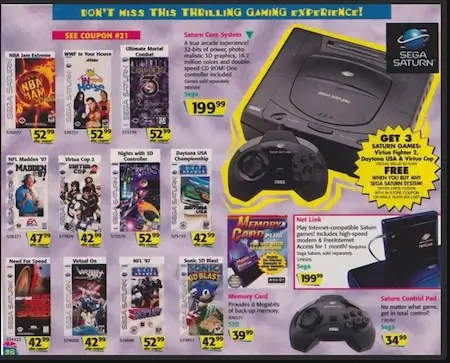 capabilities in the dust. The Dreamcast was designed with 3D gaming in mind, so you had a console that delivered very well on this front.
Still, anyone who has played a few of the Saturn’s 2D gaming titles, like “Street Fighter Alpha” and “X-Men,” can make a strong argument that this machine’s 2D library is superior.
What tips the balance one way or the other is that the Dreamcast used Hitachi’s SH4 processor, a PC-powerful chip that hummed along at 200 MHz. The Saturn’s dual VDP chips, on the other hand, simply couldn’t compete.
From a business perspective, I've handled both consoles for years but never owned either personally. For me, the decision is easy - it's about replayability today.
The 64-bit era graphics are terrible now. These games didn't age well - they're blocky and hard to play. The Dreamcast is the far superior machine. The console and library still have great replayability, while the Saturn only has replayability if that was the console you grew up on.
Edge: Dreamcast
The sound
Right from the get-go, the Sega Saturn was praised for its Yamaha YMF292 dedicated sound card. This custom processor featured a 32-slot sound generator and a 128-step digital signal processor. These capabilities allowed it to create sound mixes and generate digital sound effects. The Dreamcast, as the first of the sixth-gen consoles, had solid sound too, but it didn’t stand out the way the Saturn did. The winner here is obvious.
Edge: Saturn
The controller & Peripherals
 The controllers for both the Dreamcast and the Saturn play to those consoles’ strengths. Those who reveled in mashing circular buttons in the arcade found much to love in the Saturn’s understated 6-button controller. It was perfect for 2D gaming.
Dreamcast fans, on the other hand, had a modern controller that played to the system’s 3D prowess by offering an analog stick as well as the standard buttons. T
he addition of memory card slots allowed Dreamcast gamers to save their progress more efficiently than the Saturn’s internal memory did, and they could enjoy varied types of games in the process. For this reason, the Dreamcast has to come out ahead.
Edge: Dreamcast
The console's sales
High sales don’t always translate to quality. However, there are some passionate forum debates out there weighing the merits of these two systems based on their respective sales figures. Online numbers tend to vary, but official estimates place lifetime sales of the Saturn in the 9.26 million range, while the Dreamcast sold around 9.13 million.
There are ancillary factors to consider as well. For example, the Saturn had a slightly longer shelf life: it was released in North America in 1995 and discontinued in 1998, while the Dreamcast was released in 1999 in North America and discontinued in 2001.
Those who judge these consoles solely based on sales can come to one of two conclusions. Either the Dreamcast did better because it virtually tied the Saturn in sales in a slightly shorter timeframe, or the Saturn wins because it (barely) edged out the Dreamcast in overall sales. Since the opportunities to nitpick here are almost endless, we absolve ourselves of any further headaches by simply calling it a push.
Edge: DreamCast
The Verdict
| Category | Winner | Reason |
|---|---|---|
| Games Library | Dreamcast | More balanced library with arcade hits, RPGs, and 3D fighters. |
| Shmups / Shooters | Saturn | Legendary shmups like Radiant Silvergun & Battle Garegga defined the genre. |
| Sonic Games | Dreamcast | Sonic Adventure I & II pushed the franchise forward compared to Saturn’s weaker lineup. |
| RPGs | Saturn | Deep RPG catalog with Panzer Dragoon Saga, Shining Force III, and Dragon Force. |
| Sports Games | Dreamcast | 2K Sports titles set a new standard for realism and fun. |
| Hardware Power | Dreamcast | 128-bit SH4 CPU & 3D focus outclassed Saturn’s 32-bit dual VDP setup. |
| Sound | Saturn | The dedicated Yamaha chip gave it an audio edge over the Dreamcast’s competent but less distinctive sound. |
| Controller | Dreamcast | The analog stick, memory card slots, and modern 3D design made it feel more forward-looking. |
| Sales | Tie | Both sold 9 million units; Saturn had a slightly longer lifespan, and Dreamcast had a faster impact. |
| 🏆 Final Score | Dreamcast: 5 | Saturn: 3 | Tie: 1 | Overall Edge: Dreamcast |
It's tough to be impartial when choosing between these two consoles. The choice often depends on personal preference, like games, hardware, or controllers. As a result, the Dreamcast is the better console. It aged better, plays better today, and offers replayability beyond nostalgia. The Saturn has value for collectors and those who grew up with it, but if you're choosing which to actually play in 2026, the Dreamcast wins.
Both systems matter today, and still are very popular in the used gaming marktet, if you hae some Sega Saturn games or some dreamcast games you wish to sell. We buy both libraries, and all the console and accessories, get fast cash payments and free shipping when you sell your video games to the old school game vault.
💰 Sell Sega Saturn & Sega Dreamcast Games!
Sega DreamCast GamePlay:
Watch Zach & Brandon Blast some zombies in the House of the Dead 2.