With the Fable series being rebooted in 2027 (after a 15-year hiatus), I’ve been thinking about the massive impact of original creator Peter Molyneux on gaming in general and on me in particular.
The Fable series innovated in the RPG space by adding player agency and detail in countless interesting and quirky ways, from real estate and environmental granularity to nuanced relationships and long-term karma developments.
The Table of Contents
While the first Fable (2004) was initially infamous for failing to deliver on the enormously ambitious promises Molyneux made about what the game would do, over the ensuing years and iterations, the game caught up enough with Molyneux’s vision that it claims a special place in many RPG gamers' hearts and has more than earned the chance for its grand reboot.
Molyneux’s Early Innovations: The Birth of the God Game
But Molyneux’s pre-Fable gaming innovations from the late 80s to the early 00s are probably even more impactful and deserve revisiting. But some of Molyneux’s most influential ideas came before Fable.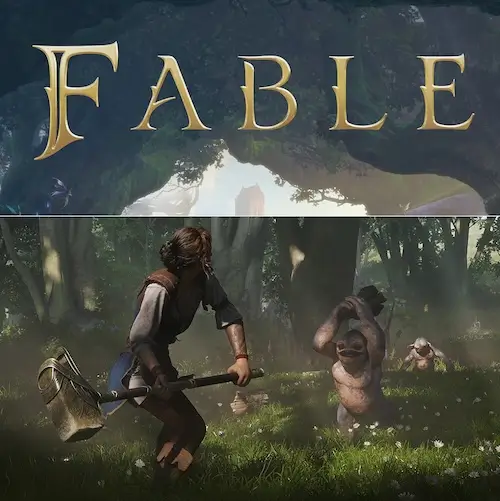
His first major contribution was inventing the god game genre with Populous (1989). Populous later made its way to the Super Nintendo, bringing the god game to home consoles.
In it, you play a god looking at a workspace laid out isometrically on a table in front of you – the world/map on a page of a book, with command buttons clustered around it. Your job is to grow both your followers and thus your power and ultimately to wipe out your followers’ rivals via divine powers and terraforming.
Then you literally turn the page to the next world/map and do it again. The god game genre that Molyneux started with Populous has settled into a comfortable niche in the gaming ecosystem and continues to this day with games like Reus (2013), Rise to Ruins (2019), and Reus 2 (2024).
Shifting Perspectives: From Populous to Syndicate
The success of Populous and god games is due in part to Molyneux’s creative shift of the player’s perspective from a warrior or party to a deity, letting players call the shots on a strategic scale while still staying close to the action.
If that reminds you of real-time strategy, you’re right – that genre had been developing throughout the 80s (and the term was first coined 3 years after Populous with the marketing for 1992’s Dune II), so those ‘be a general’ 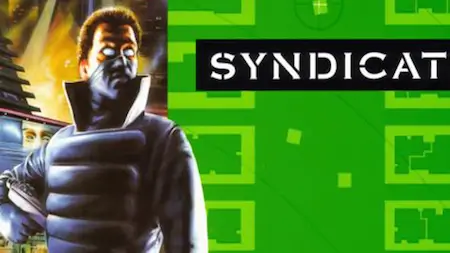 games were coming into focus alongside the first ‘be a god’ games.
Molyneux got into RTS himself in 1993 with Syndicate, a game that looms large in my personal gaming history as surely the most morally unsettling game I had ever seen; I was captivated. Syndicate added an isometric perspective to the RTS genre, adding depth and immersion to an exciting cyberpunk world.
Syndicate explored cyberpunk the same year as the original Shadowrun, a year before System Shock (1994), and several years before Deus Ex (2000), though Digital Devil Story: Megami Tensei (1987, Japan only) and a handful of standalone games had started exploring cyberpunk gaming earlier.
Syndicate, though, also foreshadowed the arrival of the first Grand Theft Auto (1997) by putting the player in charge of criminals in a game that makes no moral comment on a player’s potentially bloody rampages through civilian areas. With this combination of novel elements, Syndicate, like so many Molyneux games, had reviewers excitedly telling gamers, “you haven’t seen anything like this before.”
Playing the Villain: Dungeon Keeper and Beyond
Molyneux continued to play with perspective in Dungeon Keeper (1997), a strategy game where you play an evil overlord defending your dungeon from pesky invading heroes while striving to overpower rivals in neighboring dungeons.
This Syndicate-like shift to playing the bad guys, epitomized by the marketing tagline “Evil is Good,” came with another change of perspective: while most of the game involves top-down dungeon management, the player can 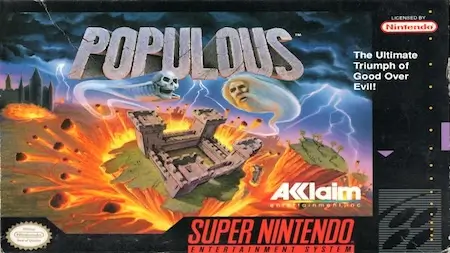 also possess individual minions and jump into their first-person perspective to control them directly. You’re still the boss calling the shots from afar—but you can micromanage when it feels fun or particularly important.
Fable’s Unique Approach to RPGs
After developing another acclaimed god game, Black & White (2001), Molyneux began work on 2004’s Fable. Looking at Molyneux’s earlier games, we can see how his interest in giving gamers different perspectives and options shows up in Fable’s many tweaks to the RPG formula.
Want to be a hero? Sure. Want to help out bandits instead? Also fine. Fable shifted perspective away from main quests – or even quests at all – to a larger ecosystem of actions, such as bragging, gambling (implementing prop bets in the early 00s?), becoming a traveling merchant, setting up housekeeping, gaining weight, getting drunk, going fishing, getting married, and engaging with townspeople and the world in many other small ways.
The Enduring Influence of Molyneux’s Games
Like his ‘be the bad guy games,’ Molyneux entices Fable’s players to act in ways that go beyond just doing hero stuff. Whether you become a god, a dungeon boss, a crime lord, or a merchant/real estate developer/spouse with a potbelly, in these games, you’re always going to be something a little bit different from the roles other games prepare you for.
That, to me, is the coolest legacy of this gaming legend: when you fired up a new Molyneux game, you likely’d never had the chance to be anything like it before.