I recently caught up with the fifth episode of Scarlet Hollow, a forking-path visual novel/RPG from indie dev Black Tabby that features a folk horror/mystery vibe and fantastic hand-drawn art. Episode 1 came out in 2020 and (after a pause in 2023 to release the fantastic meta-horror VN/RPG Slay the Princess) progressed to Episode 5's 2026 release. Episodes 6-7 will release together and complete the game.
The Table of Contents
Defining the Genre: More Than Just a Visual Novel
I struggle to describe this game’s genre because ‘visual novel’ feels too limiting, but RPG feels misleading. I’m not a huge fan of visual novels if I’m mainly passively receiving a story; I’d rather read a book than click a button three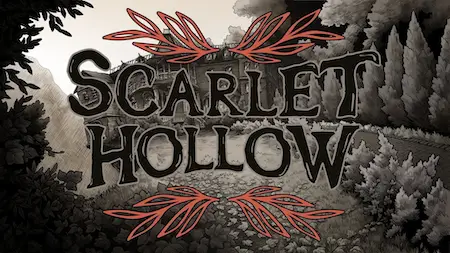 thousand times. I’ve started, but abandoned Steins; Gate, 428: Shibuya Scramble, Phoenix Wright, and other popular visual novels for various reasons, but a contributing factor in each case was that it didn’t seem to me that I had enough to do that felt meaningful and fun (visual novel fans: file this under opinion, not fact).
I like Black Tabby’s games, and I resist simply calling them visual novels because they feel different in this respect. Like (other) visual novels, they feature mostly still illustrations with a text/menu box at the bottom of the screen. But my engagement with the story's progression feels non-trivial. There are many, many paths in a Black Tabby game, and my choices among them fundamentally and consistently affect the experience I have, so I don’t feel like I’m spending hours just clicking to get to the next bit.
The RPG Elements of Scarlet Hollow
Scarlet Hollow adds a game mechanic that shades it toward the world of RPGs: player-character traits that affect what dialogue and actions (and thus outcomes) are available to the PC. The player chooses two traits from a list of seven: Powerful Build, Mystical, Talk to Animals, Street Smart, Keen Eye, Book Smart, and the hilarious-sounding Hot. I picked Mystical and Book Smart, and it was obvious how they impacted what I could do in my playthrough. I don’t know what I’ll pair it with yet, but I plan to pick ‘Talk to Animals’ in my next playthrough because there’s a possum I need to have a conversation with.
Point-and-Click Adventures: A Useful Comparison
Is this enough to make Scarlet Hollow an RPG? Not in my book. But it helps make it more than what I think of as a ‘visual novel,’ so ‘visual novel/RPG’ sort of works as a way of showing that it exists somewhere in between those two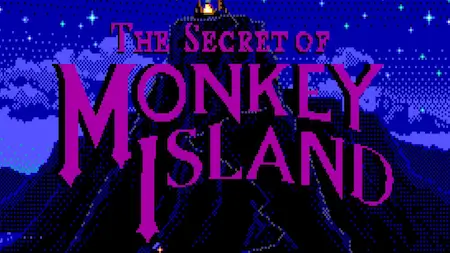 very different experiences. In trying to figure out where that is, I found myself thinking back to one of my favorite old-school genres: the point-and-click adventure.
On the surface, point-and-click adventure is no better a match for Scarlet Hollow than RPG, but I think adding it to the mix helps triangulate what’s going on with these VNs that work for me where so many others don’t. The core idea is in the title: point-and-click. In Scarlet Hollow, I feel like I’m making meaningful choices throughout the experience, whereas in many VNs, I don’t. In point-and-click adventures, I feel like the exploration and puzzle-solving, along with the VN-like choices of who to talk to and what to say to them, feel like real game interactions.
In Scarlet Hollow, I investigate a horror mystery by building a team/friend group, inquiring around, and deciding who to call on and what to say when things get dicey. In, say, The Secret of Monkey Island (Lucasfilm Games/LucasArts, 1990), I try to become a pirate, navigate rivalries and threats, and solve puzzles (with bizarre items) and mysteries by building a crew, exploring around, and building an arsenal of ridiculous insults needed to win swordfight duels.
Player Agency and Engagement
There’s more variety in Monkey Island’s mechanics/actions, but there’s more variety in Scarlet Hollow’s forking paths. Both, through this variety, give me interesting agency in the experience that I find missing in the visual novels that I end up abandoning. So while the mechanics are really different, Scarlet Hollow lives in a place in my mental game catalog that’s next door to Broken Sword, Deponia, King’s Quest, Sam and Max Hit the Road, and Clock Tower.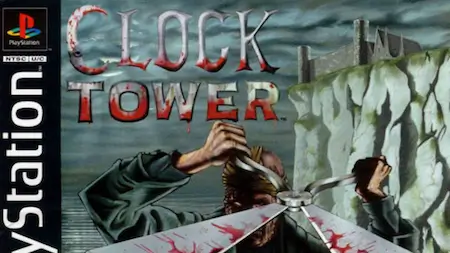
Understanding What Draws Us In
I don’t know that this particular triangulation exercise will fit anyone else’s experience of the games I’m discussing. But I hope it’s interesting anyway, because I think all of us gamers have the experience of liking some games in a genre and not others and reaching for a way to explain why.
Often, the answer is because the games involved are at opposite ends of what that genre covers, and identifying the other genres that the ones we like are leaning towards can help explain the combination of factors that makes them pull you in while others with the same label push you away. It can be fun and useful to ask ourselves, what genres do I have this experience with? And why? Figuring this out can help us spend more time with games we’ll love and less with ones we’ll wish we hadn’t sunk time into.