A small subgenre of games emerged in 2015 with Sam Barlow’s Her Story and has been kicking around in interesting ways ever since. It’s hard to know what to call games like Return of the Obra Dinn (2018) or The Root Trees Are Dead (2025): puzzle? mystery? adventure? detective?
For now, I’m going with “detective puzzle” games. The ‘detective’ part makes it clear we’re doing something different than (awesome) puzzle games like Tetris, Yoshi’s Cookie, or Kirby’s Avalanche, and the “puzzle” part makes it clear this is different than (awesome) detective-themed adventure, RPG, or visual novel games like L.A. Noire, The Wolf Among Us, Disco Elysium, Phoenix Wright, or Paradise Killer.
The Table of Contents
If you grew up playing LucasArts adventures, some of these games will feel familiar. What makes them different is that piecing together what happened is the puzzle itself.
How Detective Puzzle Games Work
So what is this in-between space I’m calling detective puzzle games, and why does it deserve a bigger audience? Basically, these games make you feel like an amazing detective. You’re not just playing an action, adventure, or RPG game through a detective character; you are doing the detecting in a meaningful way.
Her Story & Telling Lies
In Her Story and its follow-up, Telling Lies (2019) (see also 2022’s Immortality), you enter search queries into a government (police, NSA) database to retrieve short video clips (well-acted FMV) and piece together a crime-and-law-enforcement story.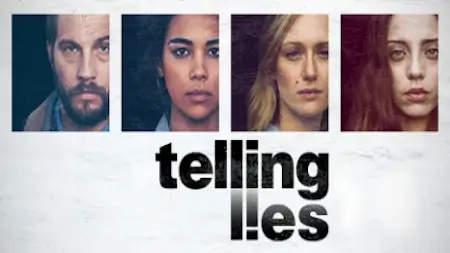
The goal is to understand what happened: to solve the mystery for yourself. You don’t have to watch all the clips; once you’ve seen enough of Her Story to understand the core narrative, the game lets you log out when you’re ready. In Telling Lies, the game’s clock limits how long you can access material from the clandestinely obtained NSA drive, ensuring that each playthrough means piecing together a narrative puzzle without all the pieces.
The player has to do mental work to develop search queries that uncover key video clips, then do more mental work to construct a story around the gaps in the video evidence. You’re not watching a detective work; you are doing the work, solving the puzzle of reconstructing a story.
Return of the Obra Dinn
The next big detective puzzle game was Lucas Pope’s Return of the Obra Dinn, where you move your detective (working for the East India Company) through a 3D world illustrated in monochrome line drawings like those of the earliest graphical video games.
You are exploring a ghost ship in 1807 to understand the fates of the 60 souls lost: who is dead and who is missing? What killed them? What was their role here? Once you’ve correctly identified the key information for three individuals, the game locks them in so you know they’re done. You've reduced the possibilities for the remaining individuals by eliminating the locked-in info from consideration.
A magic watch lets you pop back in time to view freeze-frames of the moments of crisis that led to the deaths and to explore the macabre mysteries looking for clues. Here, too, the core gameplay is based around doing the detecting, in this case to solve a narrative puzzle of identities and fates.
The Case of the Golden Idol
In 2022, Color Gray Games released The Case of the Golden Idol, a game directly inspired by Obra Dinn and Her Story, presenting another historical (18th-century) set of dark, possibly supernatural mysteries about deaths in a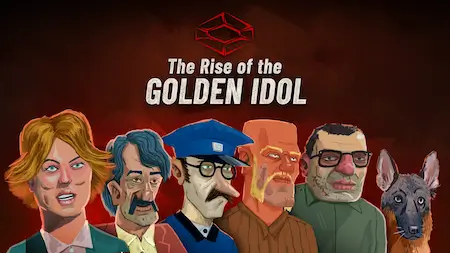 seemingly cursed family who have come across a curious, deadly artifact.
The art style and ‘Exploring’ mode game interface are inspired by classic point-and-click adventures (think LucasArts). In contrast, the ‘Thinking’ mode has you input missing identity and event details (and locks them in when enough are right) in a mechanic adapted from Obra Dinn. The game was successful enough to spawn two DLC expansions in 2023 and a sequel, The Rise of the Golden Idol, in 2024.
The Roottrees Are Dead
In 2023, Jeremy Johnston created The Roottrees are Dead for a Global Game Jam, then expanded it for commercial release in 2025. Roottrees draws most heavily on Her Story through its text-query mechanic, while its illustrated world is closer to Golden Idol.
In the game, you trace a genealogical mystery about a family whose candy business thrived for generations. Their modern scions have just died in a plane crash, leading to family infighting over who gets the company and who should be counted as members of the family at all, given the schemes, prejudices, and secret lives of those who may or may not ‘belong’ – with riches hanging in the balance depending upon the results of your genealogical detective work.
Type Help & The Incident at Galley House
A similar lo-fi indie approach to detective puzzlers appears in 2025 in the free browser game Type Help by William Rous, who then teamed up with the Roottrees team (now incorporated as Evil Trout) to turn his small free-to-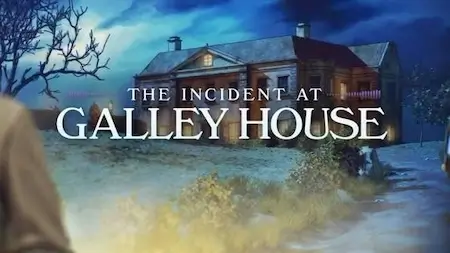 play game into a larger, commercial product in 2026’s The Incident at Galley House.
Through point-and-click gameplay, you experiment with psychic machinery to input codes tied to a place, time, and person. This lets you view a scene from the past to help piece together a mystery of decades-old deaths by using documentation and conversational clues, and by tracing the journeys of known characters.
Why Aren’t Detective Puzzle Games More Popular?
I’m honestly not sure why detective puzzle games aren’t more popular than they have been thus far. They ask a lot of the player, but surely more of us are willing to put in that mental work than the 1 million or so who bought Obra Dinn (the only game profiled here to hit the million mark), aren’t we?
Detective stories are hugely popular – is the issue that not that many people want to do the deduction work? Or is it that these games haven’t gotten enough mainstream exposure to reach fans who would love them if they found them?
Probably it’s a combination of the two, but I hope it’s tilted toward the latter, because I think these games deserve more players, and players deserve games as cool as these. So, if you haven’t played them yet, try them out, and then let me and your friends know what you think!
Further Reading
If you’re in the mood for another mystery, read about the games that influenced Lorelei and the Laser Eyes.