A while back, I wrote a post about three main reasons I give up on a game midway (even though I'm a story completionist). The three categories were 1) sort of fun but a big time commitment, 2) mechanics that just weren’t fun for me, and 3) games that I get pulled away from dozens of hours in and can’t bring myself to relearn the mid-difficulty curve. More recently, I compared short games from the early console eras to recent RPG bloat.
The Table of Contents
The Four Reasons We Quit Games
I want to revisit that now to add a fourth category that has gained share in that pie chart for me: 4) games that are fun, not mind-blowing, but that offer diminishing returns, so at some point I decide it’s made me as happy as it’s going to, I feel content that I’ve gotten my money’s worth, and I’m good calling it a day. This is sort of a spiritual successor to #1. Still, it’s not even about how long the game is; it’s about me doing a better job monitoring what I want from a game and what I’m getting from it, and not being so set on completionism that I put myself through slogs I wouldn’t enjoy.
Pacific Drive: A Case Study in Satisfying Endings
Here’s a recent example: Pacific Drive. I really enjoyed this game! I also quit it after what I’m guessing is somewhere between 1/3 and 1/2 of the way through (early in the ‘Mid Zone’, for those familiar with the game). Pacific Drive is the debut game from Cassandra Dracott’s Ironwood Studios, published by Kepler Interactive, a publisher for indie and AA developers (that also published Sifu and Clair Obscur: Expedition 33). It’s full of debut indie messiness – there are a lot of gameplay features that are never that well explained; the ‘enemy’ AI is rudimentary and gets repetitive. The gameplay loop also doesn’t develop all that much. But the world is cool, the plot is somewhat interesting, and the central dynamic of the close relationship between driver and car is unique and engaging.
All this makes Pacific Drive a perfect candidate for enjoying and then quitting. By the time I reached the Mid Zone, I was well familiar with the game loop, the storytelling, and the game's strong core and rough edges. The balance of enjoyment and grind was beginning to shift, and I didn’t see much on the horizon to tip it back toward greater fun. I spent a few minutes reading up a bit on other people’s experiences of the game. I confirmed for myself that there was no mind-blowing corner I was about to turn into a whole different gameplay loop experience. And then I stopped while I was ahead and walked away with mostly positive memories of my playthrough.
In one sense, this is part of me getting older as a gamer and making different decisions about how to spend my time. But in another sense, this is bringing me back to how games worked during my childhood in the 80s and 90s and back to those games themselves.
Lessons from the Arcade Era
When games were in arcades, and when they were on systems with very low capacity for remembering and saving game states, gaming was necessarily more about the experience of a session than about multi- day story or gameplay completion. Can you beat Duck Hunt or Baseball on the NES? Duck Hunt goes on forever; Baseball has no campaign, just one game at a time.
Well, what about Excitebike or Dr. Mario? I didn’t actually remember the answer to these, so I looked it up, and it turns out the answer is yes – in Excitebike, you have to beat the listed time in each of the (five) races to get first place, sort of like a slightly expanded version of Baseball’s one game at a time approach. Apparently, Dr. Mario shows you a special UFO cutscene ending if you beat it (20 levels) on Hi Speed, but I don’t know anyone who did this, or even knew about it, pre-internet.
The Unbeatable Game: The Tetris Phenomenon
Tetris is the same – no one beats Tetris. Right? You play it until you lose, then play more until you’ve had enough. No one is documented as having gotten past level 29 until 2011, when Thor Aackerlund was recorded reaching level 30, a level the devs clearly didn’t plan for, because the level counter stops working from then on.
In 2020, significant further progress became possible when Chris Martinez developed the “rolling technique” of drumming one’s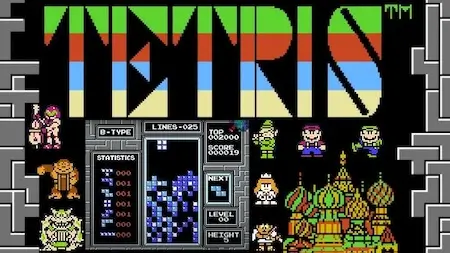 fingers on the back of the NES keyboard to push the D-pad up into a stationary top hand, which was faster and more sustainable than “hypertapping” the D-pad from the top to keep up with the game’s insane speed at high levels. Then, in 2023, 13-year-old Willis Gibson used the rolling technique to reach level 157, whereupon the game crashed trying to keep up with him, making him the first person to “beat” Tetris on the NES.
These wild Tetris achievements are interesting in their own right. But they also make the point that this game was never intended to be beaten. They didn’t program in higher-level numbers. The game only stops when you crash its programming. The point of the game was never to reach the end.
Reclaiming the Right to Stop
Pacific Drive helped me, a single-player gamer for the most part, rediscover what I had taken for granted during the NES era. You play a game until you’ve had enough fun from it and you’re ready to stop. Games today can spin elaborate stories and ratchet up gameplay loops and rewards in various ways. Still, sometimes this can obscure the core contract: games are meant to be enjoyable, and when you aren’t having so much fun anymore, that’s a good place to stop. So after I wrapped up Pacific Drive, I fired up my Atari for a couple of quick rounds of Asteroids.