Originally released for the Game Boy Advance in 2003, Fire Emblem has shown it can stand the test of time. The graphics may be outdated, but Fire Emblem has always focused on more than just visuals.
Why This Strategy Game is Still Great!
The Table of Contents
Fire Emblem is a fun turn-based strategy RPG set in a relatively typical fantasy world of magic and dragons, heroes and villains.
The Story and Gameplay Integration:
The turn-based gameplay is relatively easy for a fan of the genre to pick up – different terrain types affect movement and defensibility, there is a paper-rock-scissors-like triangle that determines which weapon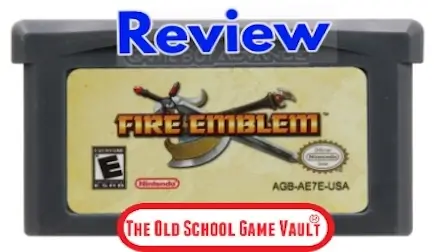 and magic types do well or poorly against other weapons and magic, and your party consists of easily understood fantasy classes.
Strategic Depth and Replayability
Weapons and spellbooks wear out over time and need to be replaced. This means you have to manage costs carefully. You must also use powerful, irreplaceable weapons and spells wisely. The "support" system lets you make a quick trade-off.
You can use a character's turn to chat with another character instead of moving or attacking. This choice brings long-term benefits. When those two characters are close on the battle map, they gain statistical bonuses.
Replayability is enhanced because in a New Game Plus playthrough, you play much of the game with a new central character (a secondary character in the first playthrough), experiencing some new levels and other levels that have been changed to increase the difficulty and provide new strategic challenges. The main campaign is also quite long (25-50 hours depending on your completionist tendencies), giving you substantial bang for your gaming buck.
The core gameplay, the replayability, and the interesting integration of story and gameplay make it worth revisiting or discovering for the first time.
Persistent Death: The Game-Changing Feature
For me, though, Fire Emblem's most interesting innovation is the use of persistent death: when a character dies in battle, that's it – you get a dialogue box with the character's last words indicating death or permanent withdrawal from battle, and then they're gone for the rest of the game. Persistent death and the support system integrate the gameplay and story in ways that make both more interesting.
The story itself is an enjoyable fantasy plot, but nothing to write home about. To the extent that you care about the story, you might find it affecting how you run a battle – do I want to put this character that I care about in danger of dying, or should I play it safer (or sacrifice another character whom I don't like as much)?
Should I pursue the battle goals or spend some time developing support (and relationship-developing support conversations) between characters I want to develop both strategically (stat bonuses) and narratively (support conversations and new character endings based on stronger character relationships)?
How Story and Gameplay Affect Each Other
Story affects gameplay if you care enough about any of the characters to take that into strategic consideration, and gameplay definitely affects story, because if you get a character killed, that's where their story ends.
Combined with a save system that only saves progress between battles, this can lead to some tough decisions if you lose a beloved character near the end of a brutal battle – do I keep playing without them, or do I restart the whole battle to try to keep this character alive?
While my playthrough probably ran about 35 hours, in reality, it was several hours longer because I'd restart battles when I lost a character I cared about. This also added an interesting sense of responsibility when I made the cold decision to continue without a certain character that I cared less about and could do without strategically.
Fire Emblem vs Advance Wars
Persistent death of developed characters is the main difference between Fire Emblem and the otherwise very similar Advance Wars series. In Advance Wars, only the COs are developed (sort of) as characters, so battle decisions have nothing to do with character development or fate. The tactical units you use are platoons, which can be reduced to partial strength, wiped out, or replaced by spending money to produce another identical unit.
In Fire Emblem, each unit is an individual, unique character. Advance Wars is also a fun game, and if you like Fire Emblem, you'll probably like Advance Wars, too, and vice versa (it's also worth noting that each game has a GBA sequel offering more of the same good). Each gets at a different interesting aspect of battle management. Advance Wars highlights the tactical interchangeability of unit types and the cold calculations of acceptable losses.
Fire Emblem highlights the personal side because every downed unit means a story ends. From a story sense, it is a much more compelling game. This mix of story and gameplay adds an interesting part to the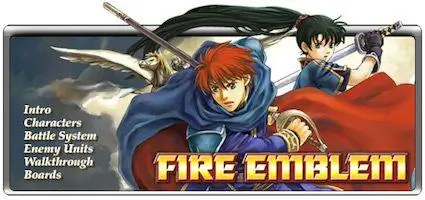 model it mostly shares with Advance Wars and other turn-based strategy games.
The Wrap Up -
The aspect of Fire Emblem that has aged the most is multiplayer. The Link Arena mode lets you battle up to five characters against friends. It's still available, but you need special hardware and local play. This makes it less accessible now.
The Verdict
We rate: Fire Emblem a 9/10 — a ★★★★½ on our retro review scale.
Would I recommend it?
Yes, multiplayer was still a bonus – the main draw of Fire Emblem was the interestingly interwoven gameplay and story in single-player mode.
Would I replay it?
Yes, they make Fire Emblem still worth playing today for long-time fans and newcomers alike.
Update: Fire Emblem became a phenomenon
Since I first wrote this review, Fire Emblem has grown from a cult favorite to a mainstream success. Fire Emblem: Three Houses (2019) was a huge success on the Switch. It introduced millions of new players to the series' strategy and character-driven stories.
Now, the original GBA game is available on Nintendo Switch Online, making it easier than ever to try. This classic game is more worth playing than ever, and the series has proven it has staying power.
The Collector’s Perspective
If you still have the original box and manual for Fire Emblem, you can expect 274% more than a loose cartridge. That's a massive premium; a complete copy with box, manual, and inserts sells for nearly four times the price of the game. Fire Emblem: Three Houses went from cult classic to mainstream hit. This shift has sparked strong collector interest in the original GBA game.
If you want to trade in any of your old Game Boy Advance games, we buy them for cash at competitive prices.